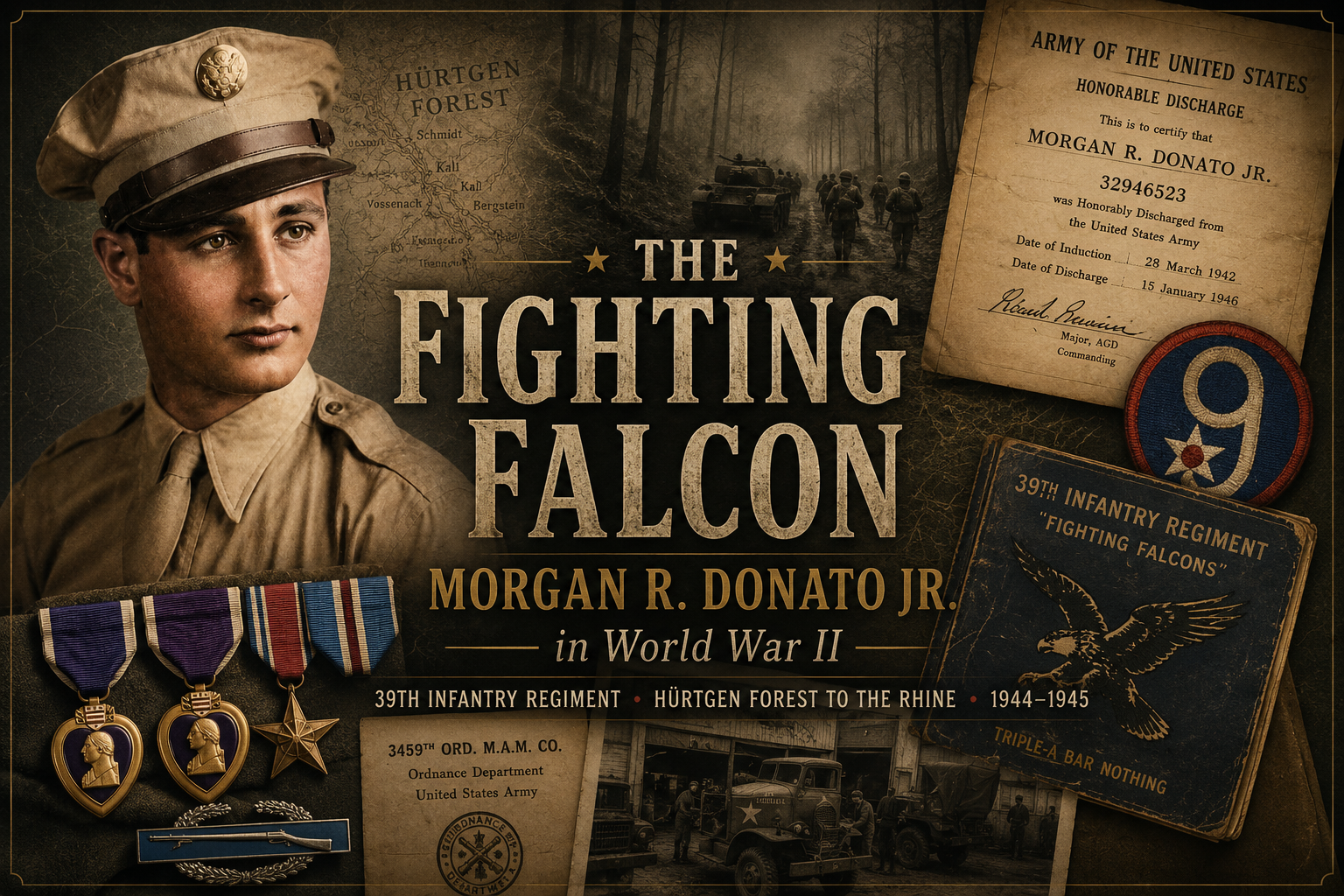
The Fighting Falcon
Morgan R. Donato Jr. and the 39th Infantry Regiment, from the Hürtgen Forest to the Rhine, 1944–1945.
Read the monographCommissioned biographical monographs for veterans, their families, and the units they served
"Every veteran carries a story the family knows in fragments — a discharge paper in a drawer, a unit patch in a shoebox, a name on a stone. This is the work of gathering those fragments into something whole."
— From the studioMost military records, when families finally request them, arrive as photocopied forms in a manila envelope — accurate, official, and silent on the human story behind them. The discharge paper says where a soldier went. It does not say what he saw, who he fought beside, what his regiment did at the river crossing, or why his name belongs in the family record beside his children's birth certificates.
I produce the document that does. Each commission is an original biographical monograph — researched from service files, pension records, unit histories, period newspapers, and family archives, then written in narrative prose and presented as a publication-quality digital manuscript. Some families print and bind theirs. Some link to them in obituaries. Some send the URL to relatives who never knew the full story.
The form is consistent. The subjects are not. I began by writing these for my own family — two World War II grandfathers and a Revolutionary War ancestor — but the method applies to any conflict, from the Revolution to the present.
A long-form biographical essay tracing your veteran's service from enlistment to discharge — written with the texture of period detail, not the dryness of dossier prose.
Service files, pension applications, muster rolls, draft cards, and unit documents — obtained from NARA, NPRC, and state archives, then transcribed and contextualized within the narrative.
Regimental history, campaign maps, period photography, and the broader operational picture — so the family understands not only what their veteran did, but where it fit in the war's larger arc.
A custom-designed digital publication — typeset, illustrated, and hosted as its own page — that reads and looks like something worth printing, framing, and sharing.
These examples show the range of what a military biography can become: a battlefield reconstruction, an immigrant family war story, or a Revolutionary-era life recovered through militia records, captivity accounts, probate inventories, local history, and family memory.
Morgan R. Donato Jr. and the 39th Infantry Regiment, from the Hürtgen Forest to the Rhine, 1944–1945.
Read the monograph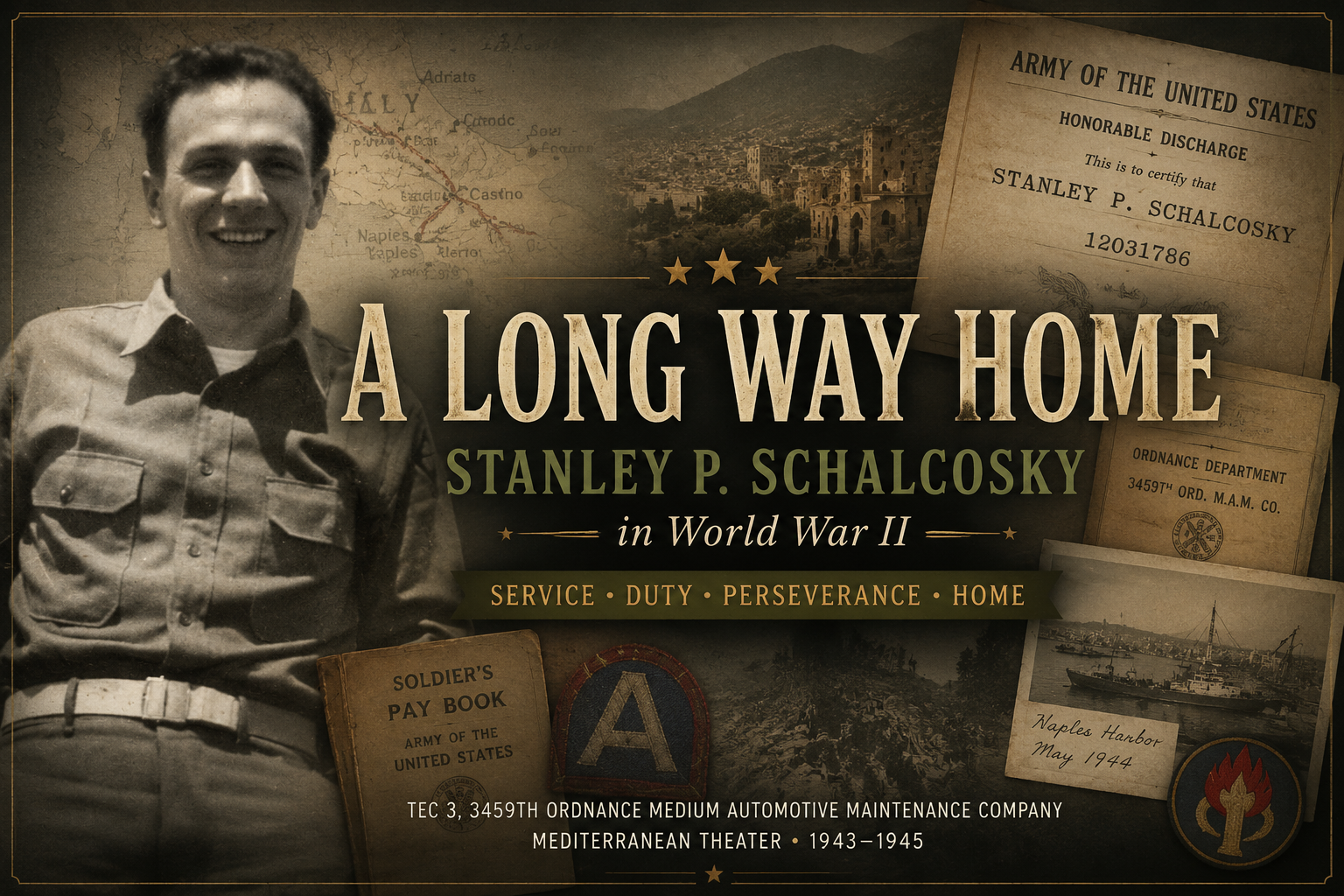
Stanley Schalcosky’s long road through World War II — a Polish-American soldier’s path from Pittsburgh across continents and back again.
Read the monograph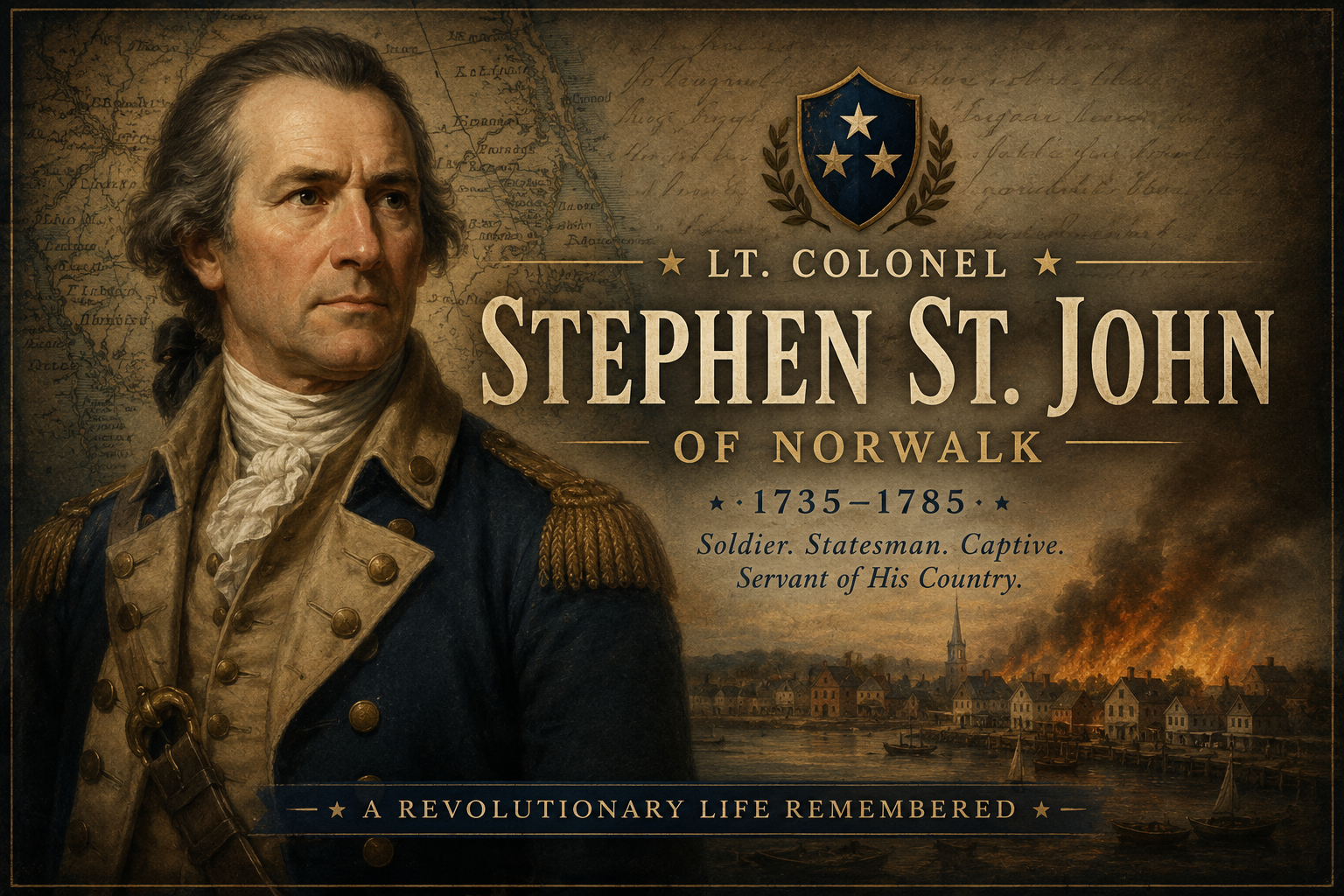
A Revolutionary War officer, Norwalk patriot, captured prisoner, public servant, and estate holder whose life reveals both the ideals and contradictions of the founding generation.
Read the monographYou complete a detailed questionnaire — name, dates, branch, what the family already holds (photos, letters, oral history), and what you most want the monograph to honor or recover. We talk by phone or email about scope.
I request service records from the National Personnel Records Center and assemble the surrounding archive: unit histories, pension files, period newspapers, regimental rosters, campaign maps. This phase typically takes four to twelve weeks depending on conflict and availability.
I draft the monograph — narrative chapters interwoven with primary documents, period imagery, and the operational context of the veteran's service. You review a draft and we refine together.
The final monograph is delivered as a custom-designed digital publication — a standalone webpage you can share, print, archive, or have bound. A PDF companion is included for printing.
These monographs are commissioned by people who already understand that some lives deserve more than a paragraph in an obituary — and by organizations that recognize their members and ancestors as part of a longer continuity of service.
John Schalcosky is a public historian, genealogist, and narrative researcher specializing in military service history, family legacy preservation, and historical storytelling. As the founder of Odd Pittsburgh, one of Pennsylvania's most widely followed independent history platforms, he has spent more than a decade uncovering forgotten stories, reconstructing overlooked lives, and transforming archival research into compelling public history.
His work combines military records, pension files, unit histories, newspapers, photography, genealogy, and family archives into deeply researched narrative monographs designed to preserve a veteran's life not simply as a record of service, but as a human story connected to family, place, and history.
Each commission is researched, written, and designed personally by John, with the goal of creating something families can preserve, share, and pass down for generations.
Begin with the intake questionnaire. It takes about fifteen minutes. After I review your submission, I will confirm which commission format best fits the story, the available records, and the family’s goals — whether the subject is your grandfather, a regimental ancestor, or a Revolutionary War forebear known only by a pension number.
Begin the Intake →